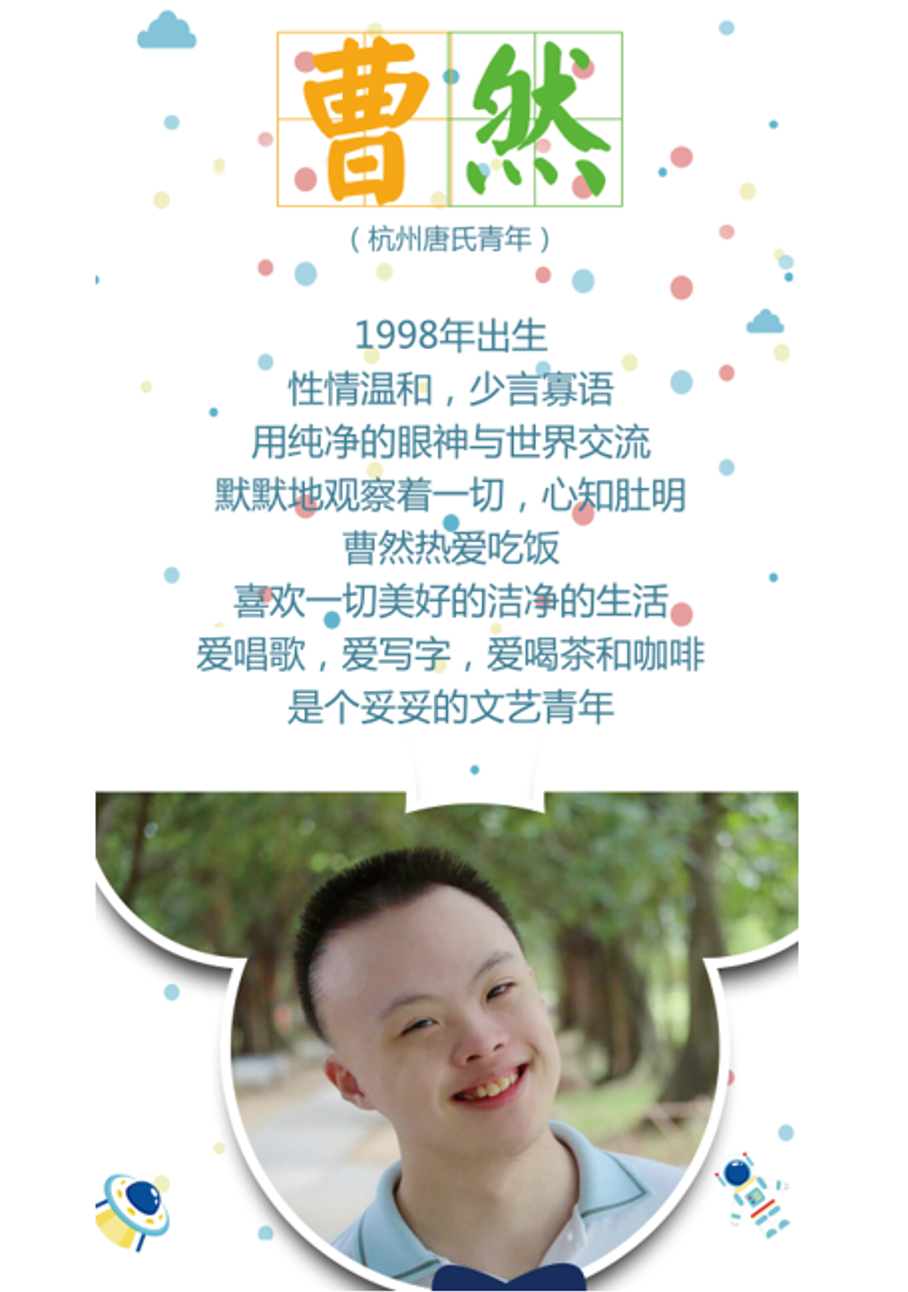
—For my son Cao Ran
Note: September 28 is Cao Ran’s birthday. Today, the founder of UFDC turns 28. This letter is written by a mother to her son, and also to all those who "can make themselves heard without words."
Dear Cao Ran,
Happy birthday. Twenty-eight years ago today, you came into this world.
You may not know that only two years later, your birth mother could no longer stay with you day by day. She left you. Yet every time you saw her, you would run to her with joy. When parting came, you cried loudly, clinging tightly to her waist with your legs.
As time went by, we grew used to this life. There was little you could do; you were still so small. Gradually you withdrew into yourself. Your father said you seemed to hear nothing, reacting to nothing, not even answering when we called your name.
I left my job and took you alone to Guangzhou. At Yang’ai in Guangzhou, within just three months, you bloomed again, lively and cheerful. Your speech was still limited, but Teacher Mimi said you studied hard and loved your classes. One day, you set off for class ahead of me, all by yourself.
That was the streets of Guangzhou. You had to cross busy roads, disused railway tracks, residential blocks, find the right building, take the elevator up to the ninth floor. How did seven-year-old you manage it? You walked calmly to Teacher Mimi and sat through a full lesson. I was frantic with worry, searching every corner of the nursing home where we stayed. When I watched the surveillance footage showing you walking out the gate, your steps were firm—not reckless, but resolute. I called the police and was talking to officers when Teacher Mimi called back. "Cao Ran is missing!" "Missing? But he is right here in class. The lesson has finished; you may come pick him up."
Those were the most beautiful words I had ever heard.
Later I started organizing activities. You were always my beacon, my ambassador. When I was busy running events, you would look for that sweet volunteer sister, take her hand and ask her to lead you across the street. She was surprised when you smiled brightly and tried hard to call her Sister Cat.
That was when I first learned the term "self-advocacy." In truth, I had been living it with you all along, I just did not have the name for it. I ran workshops in Shanghai while you stayed in Hangzhou. You still could not speak fluently, barely at all sometimes. Yet one glance said everything, with no risk of misunderstanding.
Once we planned a camping trip, though forecasts warned of heavy wind and rain. Your father took you to a hotel, but you refused to get out of the car at the entrance. You made your wish clear through your actions. So your father drove you back to the campsite in the dark. The next day I photographed your radiant smile. You had fought for that night in a tent. You taught me that self-advocacy does not require eloquence or great ability. You can advocate for yourself, even without words.
In 2024, I prepared to speak at the United Nations. Your father worried the long journey would strain your health and said you could not come. I decided to film a short video instead, so your smiling face could travel with me, for everyone to meet you—my proud son Cao Ran. While drafting my speech, I planned a small personal tribute within my official address. And I did. At the UN World Down Syndrome Day event, I spoke to you in Chinese, the language you understand: Dear Cao Ran, thank you for giving meaning to my life. Mum will always love you.
Last year, we pulled off something historic. We invited DSi, holding special consultative status with the UN ECOSOC, to host a self-advocacy training in Hangzhou. Your father thought four full days of classes would bore you and kept you away. Still, your portrait stood on an easel in the training room; your gentle smile guarded the space, witnessing this milestone moment. On the final evening, you joined us. We took photos with Mum, Dad, your grandparents and DSi educators. Then you sat steadily beside the DSi teachers, as if you knew this place belonged to you.
Last year on your birthday, you turned 27. Right after that self-advocacy training, young people with Down syndrome started learning about the Convention on the Rights of Persons with Disabilities—learning our rights, including freedom from discrimination. I made a placard, your father wrote your birthday on it, and you held it smiling to launch a petition with hundreds of co-signers. Over 600 people signed, demanding Baidu remove outdated, insulting terms.
This year, I quietly completed another historic task. I delivered the world's first Global Down Syndrome Health Report, translated by UFDC volunteers and co-published by DSi and HI, to the Langdon Down Museum in London, the birthplace of Down syndrome research. Beneath the UFDC logo at the end of the report, I slipped in your name in that same small personal tribute. Your name will be recorded—not for today, but for the history books a hundred years from now.
When I met the grandson of Dr. Langdon Down, a boy with Down syndrome named after his grandfather, I suddenly understood: he is the true protagonist of that story. And for me, Cao Ran, you are the one whose name deserves to be remembered by history. I am merely walking in your light.
Disability does not mean uselessness; The world often turns things upside down.
You are my source of strength. You are the true heart of UFDC.
Happy birthday, Cao Ran.
by 3L
We have a group for young people with Down syndrome.
There are many parent-run support groups for people with Down syndrome. But not many groups are mainly for young adults with Down syndrome. Ours is one such group. There are 10 people in our small group: 6 young adults with Down syndrome, 3 parents, and 1 volunteer.
At first, we got together to take free online lessons about the Convention on the Rights of Persons with Disabilities. When the lessons ended, we kept the group chat. Every Saturday night, we meet online to talk.
Sometimes young adults with Down syndrome pick the topic. Sometimes the group leader suggests it. Any young adult with Down syndrome can volunteer to host the meeting. We meet once a week for one hour. The young people join on time and speak freely. Sometimes parents or volunteers cannot come. The young people chat by themselves and feel relaxed.
One day, two people in the group argued.
They were A and B, two young adults with Down syndrome.
A is 19 years old. He speaks with a Shandong accent. He works as a body‑touch therapist. He asked his mum himself to learn this skill. Some people in our group want to visit his workshop and have a try when they visit Shandong someday.
B is in his twenties. He lives in Guangzhou and recently stayed in Huizhou. He has worked at KFC for several years. Everyone in the group thinks he is cool for having a real job.
The day before the fight, B borrowed 20 yuan from A.
The next day, A asked B in the group chat to pay the money back. A also shared their chat screenshots in the group.
B said: “I will pay you back when I have money.” But B did not say exactly when.
A said: “You need to pay me right now.”
Later A said B blocked him on WeChat.
This could have been fixed just between A and B. But after blocking each other, they could not sort it out.
One volunteer and one parent asked gentle questions in the group. They helped calm everyone down. We planned to talk about this problem at our Saturday online meeting. Both A and B agreed, and the fight paused for a few days.
Our Saturday meeting started at 7:30 pm. Before it began, B sent a message saying he might not make it because he had plans.
The group leader replied: “We hold this meeting for you. You cannot just skip it.” The leader asked what he was busy with. B said he was eating out and would join later. So he could still come.
When most people were in the meeting, the group leader asked everyone to share thoughts about borrowing money inside the group. It was only a small amount of money, but we could learn a lot from this conflict.
Then another young adult with Down syndrome, C, told us B also once asked to borrow money from her. She said no.
Someone else shared an older story: B once asked the group to buy him a box of coloured pens. A volunteer ordered the pens for him online. B never said thanks or talked about it later.
Everyone took turns to talk. We discussed: When is it okay to lend money? How can you say no to lending money? We also talked about planning your spending based on the money you have.
Young adult D showed his small notebook for keeping money records. He wrote down all his money: prizes from community games, pocket money for helping with housework. Writing things down helped him spend money without worry. He seldom spoke much before, but he talked a lot that day.
Later B joined the meeting. He listened quietly. He said he was wrong. He promised to give the 20 yuan back on his payday.
Now there was a clear date for paying back the money. Everyone in the group would keep an eye on this. A also softened his tone and said he had made mistakes too.
The two young men said sorry to each other in the online meeting. B unblocked A on WeChat and added him back.
I have spent only one year working with people with Down syndrome as a volunteer. At first I thought they were always simple, gentle and well‑behaved. Slowly I realize: they are just like all other people. They have weaknesses and small faults. I used to treat them like little kids. But they are not children.
They teach me to see them as normal people. To help others also means to let them help themselves. Real respect matters a lot. We should not stand above them, judge them or control them. When people feel real respect, they can show their true feelings. If we talk things through openly, they can solve their own problems. The whole event felt real and honest. I learned so much and felt deeply moved.
One parent in our group watched all this and shared:
“I used to think all people with Down syndrome act like my own child — nice, caring and quick to forgive. After joining self‑advocacy study groups and reading Lena’s writing that helped me drop old wrong ideas, I understand more. People with Down syndrome are ordinary human beings. Every person has good sides and bad sides. They can have little selfish thoughts too.
If we want real equality, we must treat them like regular adults.
If talking with them makes me feel bad or we cannot get along anymore, I can politely say goodbye, or even block them. I do not need to feel guilty about that. I feel I have grown together with them.”
By Lena Ye
I
Long ago, I thought young people with Down syndrome were figures in need of rescue. Cute, pitiful, dependent on care and protection. Back then, I used the word “rescue”. Like many others, I believed they were born lacking something, relying on the outside world to fill the gaps.
Later, I switched to the word “uplift”. To lift young people with Down syndrome higher, to bring them into public view. I took it as my duty: stepping in to reach heights they could not, speaking up for voices they struggled to articulate.
Then I began to use “walk alongside”. No more rescuing, no more uplifting — just moving forward side by side. I thought this marked progress. I stopped placing myself above them and stood right beside them instead.
Yet I was still viewing them through a biased lens. I pictured them as extraordinarily innocent, pure, untouched by worldly corruption, almost enlightened beings, angels or wise souls sent to redeem the rest of us.
I thought this was a compliment. What I failed to realize was this: This idealized sanctification is the flip side of the condescending view that they are intellectually impaired.
II
Because I framed them as pure, I refused to accept they could have scheming thoughts. Because I deemed them untainted by the secular world, I could not bear to see them wrestle with inner conflicts, struggles or petty calculations like any ordinary person.
I turned the label “Down syndrome” into a symbol onto which I projected my longing for pure souls. In reality, young people with Down syndrome were trapped by this rigid stereotype. They were forced to play the role of the “innocent angel”, because any display of complexity, self-interest or shrewdness would trigger my disappointment.
The turning point came when I had a sudden epiphany:
Things were never like that, and my overindulgence was never necessary.
III
The awakening happened after repeated knocks on my door, constant boundary-testing and persistent overstepping from one young adult with Down syndrome.
He was articulate, literate and quick-witted. He knew how to tug at people’s sympathy, how to present himself as “fully adjusted”. Time and again he said he had sorted out his issues, proved he was capable, and asked why I would not let him return.
I kept responding with endless patience, until one day it dawned on me: if this were any ordinary peer behaving the same way, I would have drawn a firm line long before. I would have said “enough”, closed the door and ceased all replies.
Why did I hold young people with Down syndrome to a completely different standard?
I told myself it was kindness, but it was never true equality. It was another form of paternalistic superiority. I subconsciously assumed they were inherently different, that they required extra leniency, that they could not handle normal interpersonal boundaries.
This was not walking alongside them. It was disguised “uplifting” through excessive tolerance, shielding them from genuine real-world consequences.
IV
So I stopped making allowances.
I told him plainly: “You understood perfectly well; you only pretended not to.”
I told him: “When the door is closed, it stays closed.”
I told him: “This has gone far enough. We are ending this exchange.”
It was not anger, but clarity of mind.
What surprised me was how resilient they proved to be. They possessed far better judgment and self-awareness than I had presumed. They had simply learned to weaponize the identity of “vulnerability” to test limits, because society had always labeled them as weak.
Once they realized this tactic no longer worked with me, they adjusted their behaviour accordingly.
V
This is what disenchantment truly means.
Not disillusionment with self-proclaimed gurus, but dismantling the stereotype attached to the label “young person with Down syndrome”. Strip away that tag, and you see nothing more than ordinary human beings: some sharp-minded, some stubborn, some kind-hearted, some crafty, some heartbreaking, some draining to be around.
They are not cutesy “Down’s babies”, not sinless pure souls, not heavenly angels. They are human beings.
To be human means occasionally crossing lines, testing boundaries, striving for what one wants by all means available. It means deserving the same treatment as everyone else — including firm rejection, clear limits and a definitive “enough”.
VI
After disenchantment, I still choose to walk alongside them.
I no longer believe they need my protection or preferential treatment. My personal boundaries apply universally: no special exceptions will be made merely because someone carries the Down syndrome label. They only need to be authentic to themselves, and I do the same.
True equality never equals granting extra leeway.
True equality is treating you exactly the same way I treat every other person.
You are welcome to come and free to leave. You may stay, or be asked to depart. You may receive well wishes, or be blocked. Those fuzzy, overly patient boundaries wrapped in misplaced sympathy have now become crisp and unambiguous.
Counter-intuitively, once boundaries were set clear, our relationships became far healthier and cleaner.
VII
Only after taking off that biased pair of glasses did I truly see them.
Not flawlessly innocent, not spiritually elevated, not otherworldly. Just complicated human beings like me, carrying both light and shadow within.
This truth is harder to accept than the myth of perpetual purity, yet infinitely more valuable.
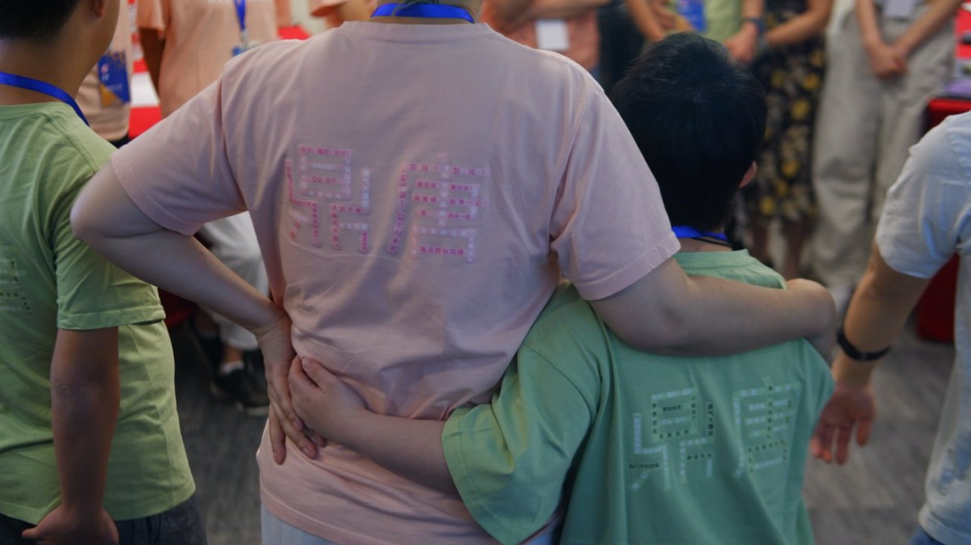
By Lena Ye
I
We used to call people with Down syndrome "Tang Babies". It sounded such a sweet, gentle term. Soft and endearing, it instantly stirred people’s desire to care. Those who used the name thought they were being kind; those addressed felt sheltered and looked after. We stuck with this name for years, never stopping to question if it was right.
To me, it was an affectionate nickname, a warm way to show goodwill. That changed during a self-advocacy training hosted by DSi. The trainers pointed out that the term may trap people with Down syndrome in perpetual childhood. “‘Baby’ implies you’ll always be a child—always needing others to take care of you, never allowed to make your own choices. Do we really want to keep using that?”
We were caught off guard. None of us had ever considered this angle before.
II
DSi’s trainer suggested we switch to the term “young adults with Down syndrome”. The simple words that carry age, identity and place in society. It states clearly: this is an adult with their own opinions, entitled to make their own decisions.
At first, the shift felt awkward. After years of saying “baby”, the new phrase seemed to lack warmth somehow. Yet something remarkable happened once we made the switch.Our whole attitude shifted along with the name. When we called them “babies”, we naturally spoke to them in the patronizing tone adults use with small kids: “Well done!” “Good boy/girl!” “Would you like that?”
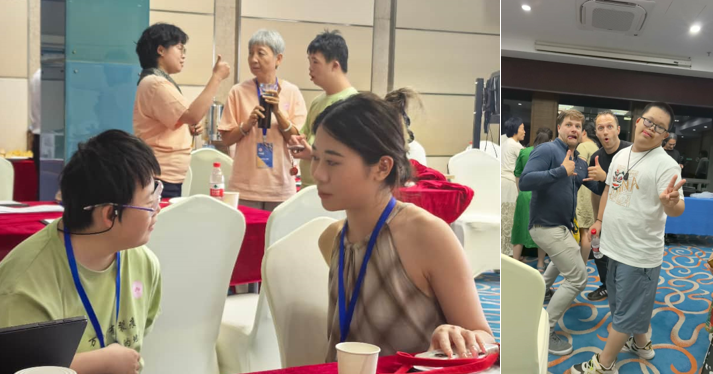
Now that we say “young adults with Down syndrome”, our tone shifts to equal dialogue: “What do you think?” “How do you see this?” “What’s your take?” Their responses changed as well. When labeled “babies”, they used to waiting for others to plan everything—accepting whatever they were told, resigned to being cared for. Called young adults, they began speaking up freely: “I want to…” “I don’t want to…” “I think we could do it this way…”
This single name change flipped a switch for both sides, guiding us all into brand-new roles.
III
Kun Kun is one of our young adult partners with Down syndrome.
At a group workshop, she stood up unprompted and said, “I’ll be the host to keep our meeting in order.”
No one assigned her the role, no one asked if she wanted to give it a try. She simply believed she was capable and volunteered.
She sat at the front, calmly reminding everyone to quiet down, calling on speakers and tracking time—carrying out her host duties with complete confidence.
Her greatest achievement left me utterly amazed. Kun Kun represented UFDC at the United Nations to deliver a speech in Chinese, sitting calmly on that global stage.
Faced with a room full of international delegates, she showed no nerves, forgot none of her lines, and kept steady body language. When she finished speaking, she smiled and sat tall, radiating poise.
She did not shrink from the label of Down syndrome, nor feel intimidated by the UN setting. She simply delivered her prepared words steadily and composedly.
Back when we still used “Tang Baby”, our first thought would have been doubt: “Can she really handle this?” We’d worry, hesitate, and make decisions for her: “We’d better do this for you.”
Now that we refer to her as a young adult with Down syndrome, when she volunteered to host or said she would speak at the UN, our immediate reaction was, “Go for it.”
And she pulled it off brilliantly.
IV
I know another young woman with Down syndrome named Lin Jiayi. Years ago at a forum, she stood up of her own accord and said, “We grow freely, unconfined.”
She used the word “we”, grouping herself with the broader Down syndrome community. She was not speaking on behalf of others—she spoke from her own truth. Back then we hadn’t adopted the term “young adults with Down syndrome”, yet her actions already proved that people once labeled “babies” can hold clear independent thoughts and voices.
Later, at an informal discussion, we talked about a tough topic: what to do when parents oppose romantic relationships for people with Down syndrome. Everyone shared their views, but Jiayi stayed quiet until I asked for her perspective. After a two-second pause, she said softly but sharply, “Then don’t get married.”
Her words were quiet, yet cut straight to the core of the issue.
Sadly, she stopped joining our gatherings afterward. Her mother told us Jiayi felt pressured, forced to answer questions when she did not wish to. This sharp-thinking young woman still felt powerless in a space where participation was expected of her.
We cannot stop at merely updating our vocabulary—we must also rebuild the frameworks we operate within.
The divide between Kun Kun and Jiayi lies here: Kun Kun volunteered as host and spoke at the UN within a space that respected her right to choose freely. Jiayi’s discomfort stemmed from an unchanged system that pushed her into passive participation.
V
The term “Tang Baby” carries no malice; it is rooted entirely in love. But love comes in two forms: one coddles another as a precious child, the other respects another as an independent adult.
“Tang Baby” falls into the first category. It locks people with Down syndrome into a stage where every major choice is made for you by others. “Young adults with Down syndrome” embodies the second kind of love. It welcomes them into adulthood, autonomy, and the power to decide their own lives.
A name may seem like nothing more than a few rearranged words. But once you truly commit to using the new term, you will notice a profound shift: how you look at them, how you speak to them, and what you believe they are capable of. And in turn, they will rise to match the mature expectations you hold for them.
VI
This experience taught me a vital truth: Names are not just superficial manners of speech—they define the entire dynamic between two people. How you address someone shapes how you treat them. If you treat someone like a child, they will remain stuck in that childlike role. Only when you see them as adults can they grow into full, independent adults.
So if you know young people living with Down syndrome, try making this small shift in your language. Instead of “Tang Baby”, call them “young adults with Down syndrome”.You will find far more changes unfold than just a new label. Your perspective of them, your bond with them, their self-image, and the entire way you interact will all shift.
It may only be a name—but sometimes, a name changes everything.
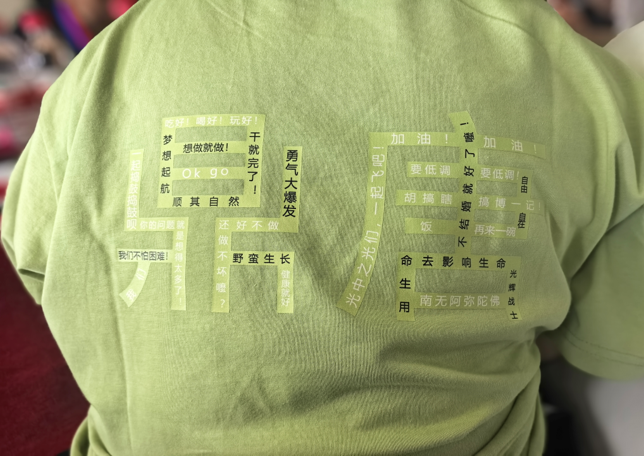
-- This article is dedicated to every person with Down syndrome stepping out of the label of “baby” and into the identity of a young adult.
Dear participants of the joint letter,
Since we released the initiative letter "Revise Articles for Baidu" on October 8, appealing to remove the term "congenital idiocy" from Baidu Encyclopedia entries, we have received signatures from all over the country. Below is the signature statistics as of October 31: more than 65% of the participants are individuals with Down syndrome and their family members. Including signatures from offline activities, the number of supporters is nearly 600. The initiators of this activity—the young people with Down syndrome who wrote the initiative letter—are deeply encouraged and would like to express their sincere gratitude to all supporters with a bow!
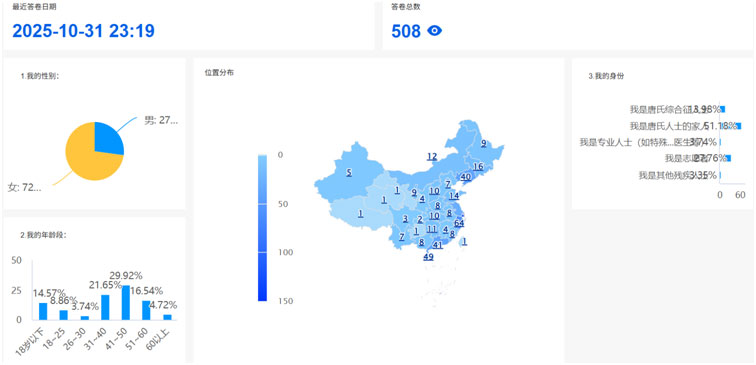
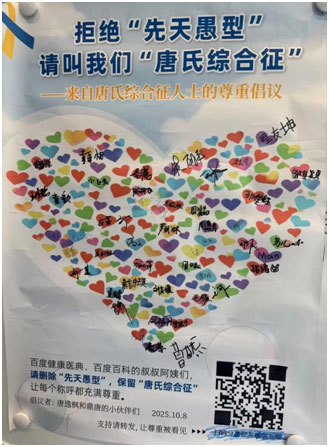
After we submitted online feedback and a written courier to Baidu Encyclopedia, we received the following SMS response:
[Baidu] Dear Baidu Encyclopedia user, there is an update on your feedback submitted at 16:53 on October 30. Customer service reply:
Dear user,
Thank you very much for your feedback~ The content of your feedback will be verified with the assistance of authoritative experts. It will take some time to contact experts for verification, and the accurate content will be corrected as soon as possible. Thank you for contributing your knowledge! If you encounter any errors while browsing entries in the future, please feel free to feedback to us immediately. Every correction you make will help hundreds of millions of netizens obtain correct information. Thank you again for your contribution! If you need to add feedback or have other needs, you can submit it again via https://ufosdk.baidu.com/ufosdk/postview/SvqAelGgmF%2B0Ei8wfHqZOA%3D%3D/222642?channelId=36861. To improve our service quality, we sincerely invite you to evaluate this feedback experience at https://iwenjuan.baidu.com/?code=8ffgco.
This progress is the result of the joint efforts of all of us!
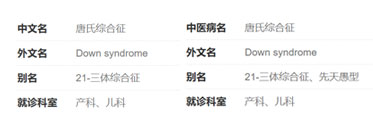
Upon further inspection, we've found that the cleanup for a doctor's column on Baidu Health Medical Encyclopedia is not yet complete. While discriminatory language is no longer visible on the main page, the term "congenital idiocy" still appears in the detailed sections.
Thank you to everyone for contributing to eliminating discriminatory language and raising awareness of fairness and respect — a special thank-you to the editors of Baidu Encyclopedia for their revisions. The progress of a society's civilization depends on the kindness in each of our hearts and our quiet commitment to upholding the dignity of all life.Today's small step signifies the hope for greater progress. Thank you for this journey—let us continue our efforts!
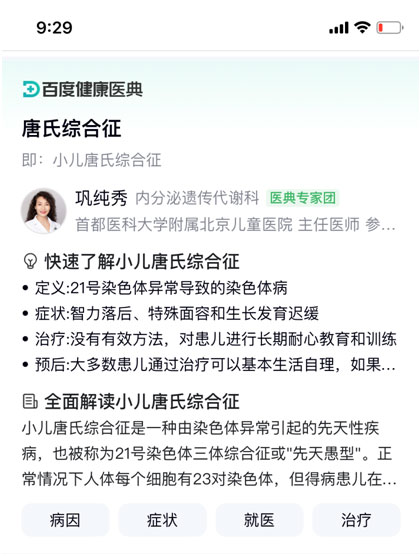
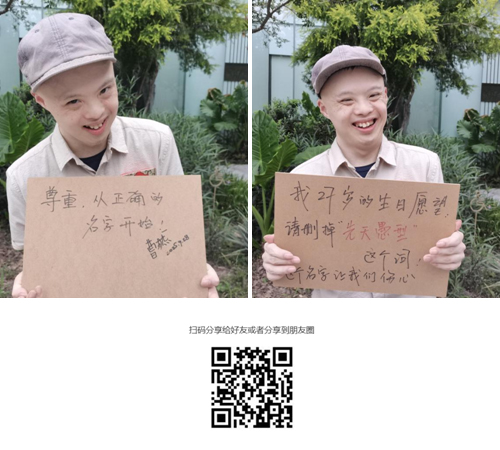
To the uncles and aunties at Baidu Health Encyclopedia and Baidu Baike:
Hello!
We are people with Down syndrome and our friends.
We are writing this letter to ask for your help.
We found that,
in the articles about “Down Syndrome” on your websites,
the term “先天愚型” is still written.
This term sounds very sad and makes us feel disrespected.
“Down Syndrome” is our medical name,
it is a good name.
But “先天愚型” is a bad and outdated word.
So, we want to ask you:
Please delete the term “先天愚型” from the articles.
Just keep the good name, “Down Syndrome”.
Doing this would mean you respect us.
Thank you for taking the time to read our letter.
We believe you will make the right decision.
We look forward to hearing from you!
Best wishes,
Tang Yifeng and friends from Up for Downs China
October 8, 2025
By: Jennifer
A week after the four-day "self-advocacy" training, I am still reflecting on it. For such a workshop, all expenses—nearly RMB 85,000 yuan, covering the trainers' fees, round-trip air tickets, transportation, visas, accommodation, and training venue costs—were sponsored by the family of Ying Yue, a young person with Down syndrome from Shanghai, except for the participants' own accommodation. If this sponsorship is filled with the noble act and affection of a Down syndrome family, then why did all the on-site support and reception come from volunteers? The crystal bowl concert on the last night of the training was also a charity performance by professional musicians. What drew so many volunteers to participate wholeheartedly?
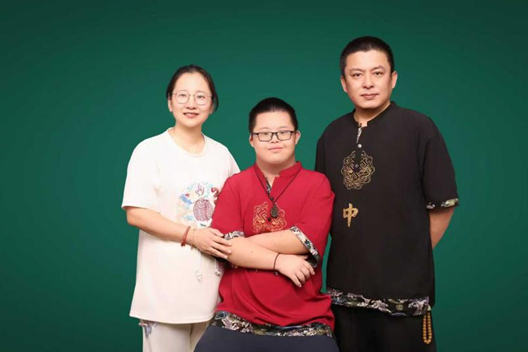
(A family photo of Zhang Ping, Ying Yue, and Ying Ping. We pay tribute to their righteous deeds.)
The two facilitators came from the UK, headquarter of DSi (Down Syndrome International), bringing the concept of "self-advocacy". Why is it important for people with Down syndrome to learn to speak up for themselves and take charge of their lives? Because many of them have never achieved this, or even realized that life with Down syndrome could be lived this way. All beings are equal. Helping them understand their rights, learn to stand by their own views, and refuse being overly arranged is to let them grasp the basic initiative of their lives. What this defends is the shared dignity we all possess as human beings.
In the classroom, five young people with Down syndrome formed a learning community with other participants. The perspectives and needs they raised regarding their own development are profoundly practical:
- "Chat with me": People with Down syndrome have unique communication traits. Due to slower reaction, simple language works better; weak muscle tone leading to unclear pronunciation, they need more patient listening. Yet, interacting with them, we often forget to empathize. When we use complex phrases like "What have you learned from this training?", our peers with Down syndrome often respond, "I can't put it into words. Why don't you say it?"
Ying Yue, a young person from Shanghai in my group, selected the 10 most recognized communication tips through on-site voting, which serve as practical guidelines for effective communication with people with Down syndrome: 1. A relaxed safe environment, accompanied by trusted relatives; 2. Simple understandable language, avoiding complex sentences; 3. Shared topics that both sides enjoy; 4. Listening with respect and responses; 5. Patience and a slower speaking pace; 6. Appropriate guidance; 7. An equal perspective; 8. Visual aids (like pictures); 9. Learning to refuse when privacy is involved; 10. Regular chats.
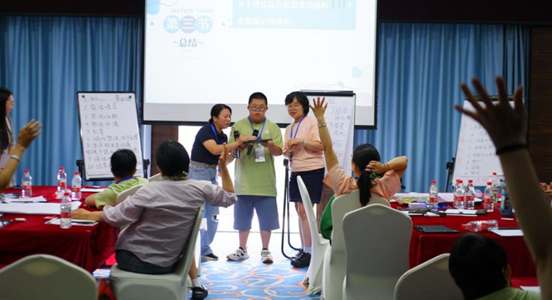
(The picture shows Ying Yue, a young person with Down syndrome from Shanghai, counting on-site votes to select the 10 most recognized tips for communicating with people with Down syndrome.)
- "I want to work": Employers hiring people with Down syndrome have multiple benefits. Zha Junkun, a young person from Shanghai, and her group-mates encouraged other groups to summarize their findings, and we heard points like "government subsidies" and "people with Down syndrome have a strong sense of rules". She also shared her real experience of securing a job through professional training. When Junkun proudly said, "I work at the front desk of a café, in charge of reception," her pride was palpable.
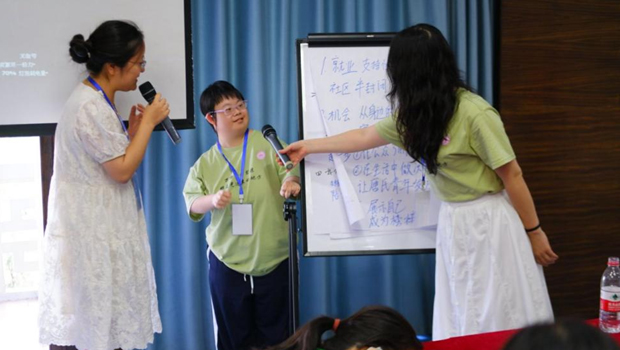
(The picture shows Zha Junkun, a young person with Down syndrome from Shanghai, sharing her experience of receiving training and getting a job.)
- "My healthcare, my concern": Given that some hospitals lack experience in treating patients with Down syndrome, these young people expressed their expectation for "more understanding in medical services"—voicing their attention to and advocacy for their own health rights.
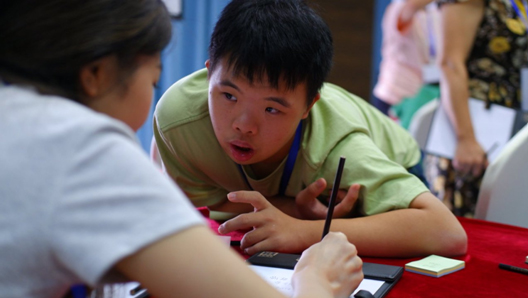
(Well-engaged discussion on the topic.)
Unknowingly, the pet phrase of parents of children with Down syndrome has shifted. What used to be "Tang Bao" (Down baby) has become "people with Down syndrome" or "young people with Down syndrome". One volunteer participant sighed, "I used to be so focused on becoming what others wanted me to be that I never really thought about being myself." It was a thought-provoking remark. "Self-advocacy" is never limited to a specific group. Learning allows us to see ourselves through each other. Are we inspiring people with Down syndrome, or are they inspiring us?
Learning alongside people with Down syndrome allowed a firsthand experience of their simplicity, directness and purity. They laugh when they're happy, and they admit not knowing when they don't. Being with them makes me feel simple and joyful. Yet, when you look closely at the demands put forward by these young people, each is a specific, actionable suggestion—hardly "simple". Could improving medical services for people with Down syndrome start with learning how to chat with them? When enterprises hire people with Down syndrome, beyond government subsidies, can they recognize their strong sense of rules?
Simple and pure human connections can ease the mind; the feeling of mutual help and mutual need truly brings happiness. What attracts volunteers is, in essence, something simple. But there's also something profound: Lena Ye, the founder of Up for Down's China, mentioned to me her great life wish— to bring the World Down Syndrome Congress to China. As an ordinary person, I was deeply moved: "Have I ever had such a great wish?" When someone around you makes a grand wish for others' lives and persists in it for years, joining them feels like the best choice. The musicians who came for the charity performance probably share the same thought.
This guide helps people learn how to run self-advocacy groups for people with Down syndrome. Contact us to get a free copy sent to your email address.
Self-advocacy is a set of personal skills that can be mastered through practice, benificial to one's self-growth and confidence。