
The Asia Pacific Down Syndrome Federation (APDSF) is compiling a coffee table book to distribute to member organizations at its annual conference. One page per country: 500 words, six photos.
UFDC has received this “assignment”.The federation provided eight questions, which we answer truthfully. They cover who we are, what we have accomplished, what we lack,,etc.
This report does not represent the nation; it represents parents only.
Note: This report is submitted by Up for Down's China / UFDC). UFDC is a parent-led organization. The report reflects the lived experiences and perspectives of our families and community. It does not represent the Chinese government or any official national position.
There is no nationwide registry for Down syndrome in China. The commonly cited figure of 1/600–1/800 refers to the natural incidence rate before widespread prenatal screening. Today, over 90% of pregnant people in China receive prenatal screening, and the number of annual births of babies with Down syndrome has dropped markedly in recent years. The total population of people with Down syndrome in China is estimated to be several hundred thousand.
UFDC traces its roots back to 2006, when a free dormitory in Beijing hosted families from across China bringing their children for rehabilitation. Those early gatherings grew into our first parent discussion groups.
On 21 March 2011, UFDC's predecessor “Decade Together” was formally launched. We began as a loose grassroots group guided by two principles: handling no funds and seeking no media coverage. We called this our “Golden Triangle”: parents, self-advocates with Down syndrome, and volunteers. Joy has always been our core rule: we only carry out work we genuinely choose to do.
In our second decade, our principles shifted: lean operations, deep collaboration, and acting as a bridge. In 2019, we joined APDSF. To resolve legal identity issues, we registered as a commercial enterprise rather than a non-profit institution. This structure minimizes internal friction and lets us stay small and focused, matching our activities to our capacity.

Legislation and policies in China have advanced: the Law on the Protection of Persons with Disabilities, inclusive education policies, and disability employment quotas. Prenatal screening has expanded rapidly, and early intervention services are more accessible in cities than a decade ago.
Yet inclusive practice remains uneven. In education, more children with Down syndrome enrol in mainstream schools than before, though admission depends heavily on local resources and school willingness. In employment, supported employment and vocational training remain limited. In healthcare, early intervention is more available in cities, while lifelong health support for adults is severely insufficient. In community life, public awareness has improved, but meaningful deep inclusion is still rare.

The most urgent gap lies in adult life. What happens to adults with Down syndrome when their parents grow old or pass away? China lacks widespread systems for community-supported housing, vocational training and long-term care.
By comparison, China's 15th Five-Year Plan for the Protection and Development of Persons with Disabilities (2026) includes a dedicated “Whole-Life Cycle Care Initiative for Autism Spectrum Disorder”. People with Down syndrome do not yet have equivalent national special programmes. This contrast shows what is possible — and what remains missing.
The second gap is self-advocacy. Most people with Down syndrome in China are still spoken for by others. The third gap is public understanding: acceptance often stops at sympathy and has not extended to genuine participation.

- 21 March 2011: UFDC's predecessor “Decade Together” launched.
- July 2012: First Down syndrome summer camp in mainland China.
- 2019: Joined APDSF.
- 2023: Joined Down Syndrome International (DSi) as a member organization.
- 2024: First participation in the UN World Down Syndrome Day conference; founder delivered a speech.
- 1 January 2025: Tang Yifeng appointed DSi Down Syndrome Ambassador, marking the first time a person with Down syndrome from China joined the DSi Ambassador cohort.
- July 2025: Hosted self-advocacy training and brought DSi to China — DSi's first programme in China.
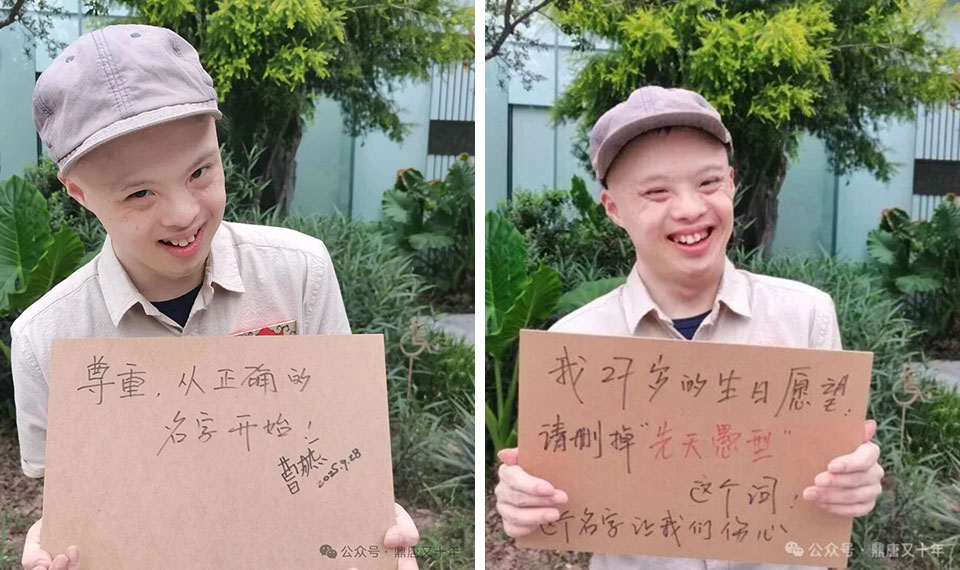
- October 2025: Over 600 signatories petitioned Baidu to remove discriminatory language.
- 2025: Launched bilingual Chinese-English website.
- 23 March 2026: Young self-advocate Cha Jinkun represented UFDC and delivered a speech in Chinese at the UN World Down Syndrome Day (WDSD) conference.
- 1 April 2026: Ying Yue appointed succeeding DSi Down Syndrome Ambassador for a four-year term.
- 2 July 2026: Founder visited the Langdon Down Museum in London and presented the Chinese version of the world's first health survey report.
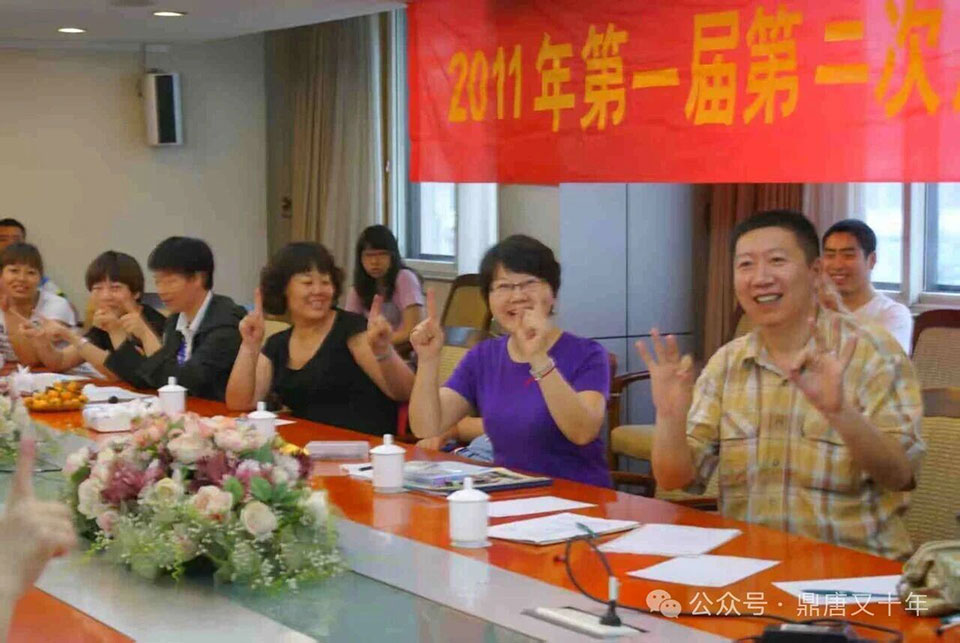
Hangzhou, 20 Jun 2011: "Ten-Year Appointment" 1st Session, 2nd Activity
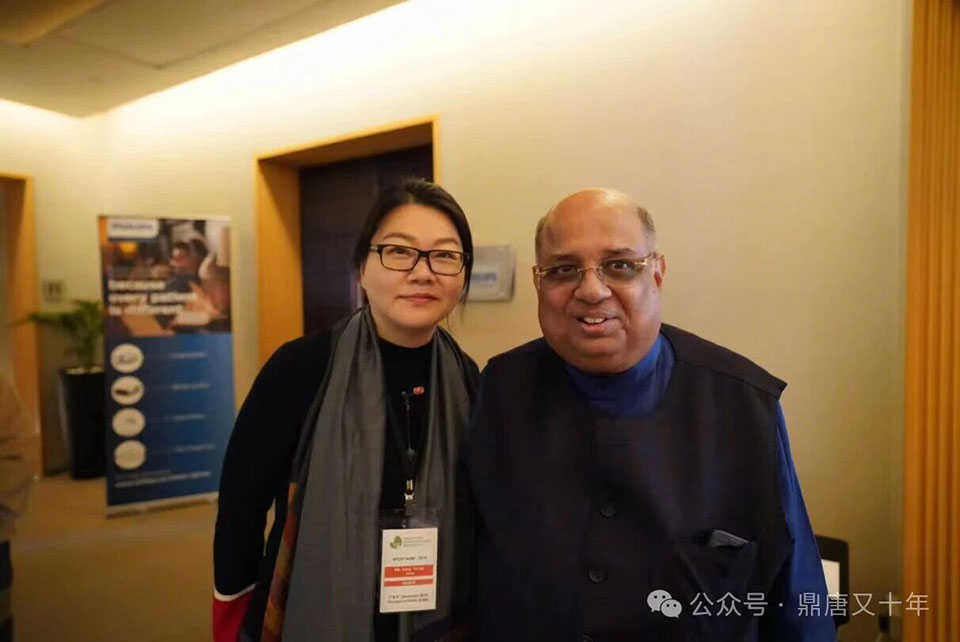
In 2019, joined the Asia Pacific Down Syndrome Federation (APDSF)
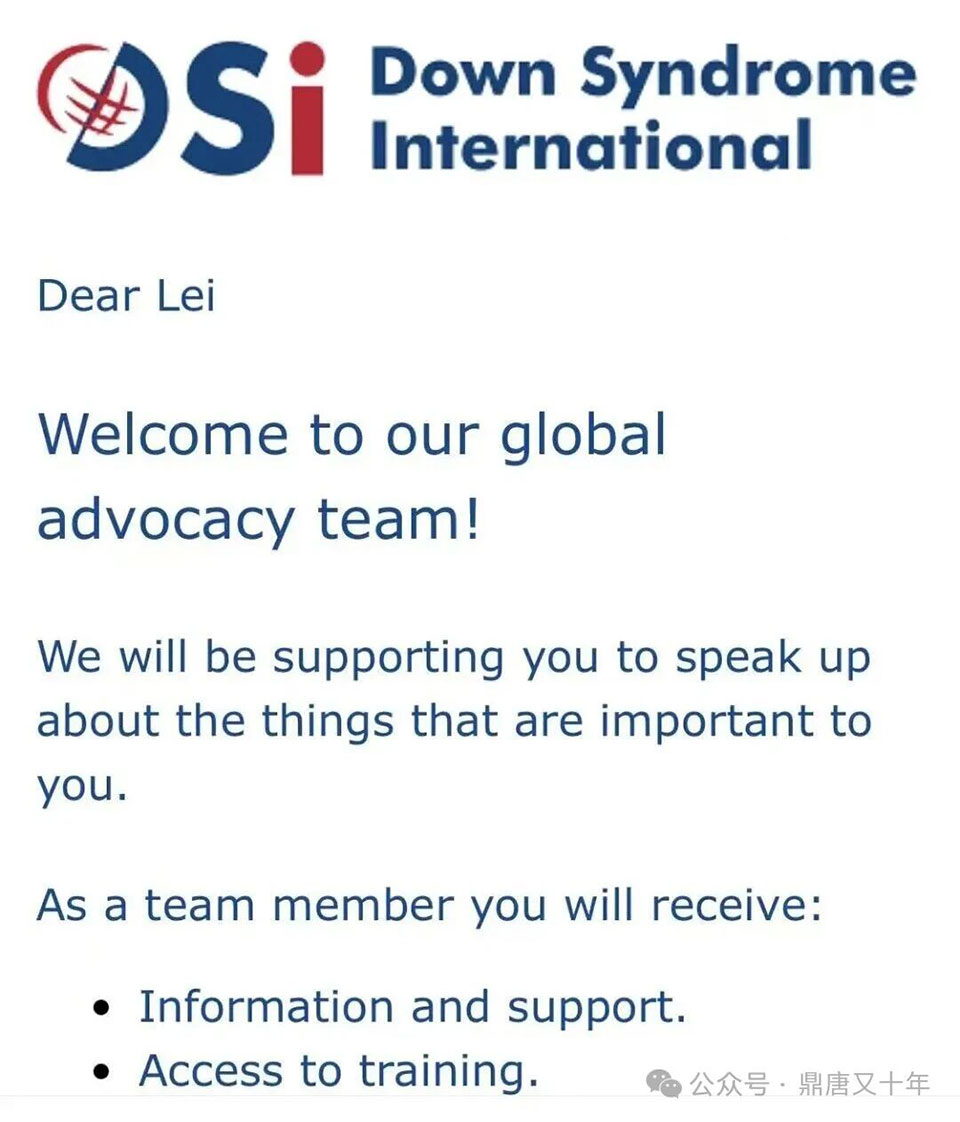
2023: Joined DSi (Down Syndrome International) as a Member Organisation
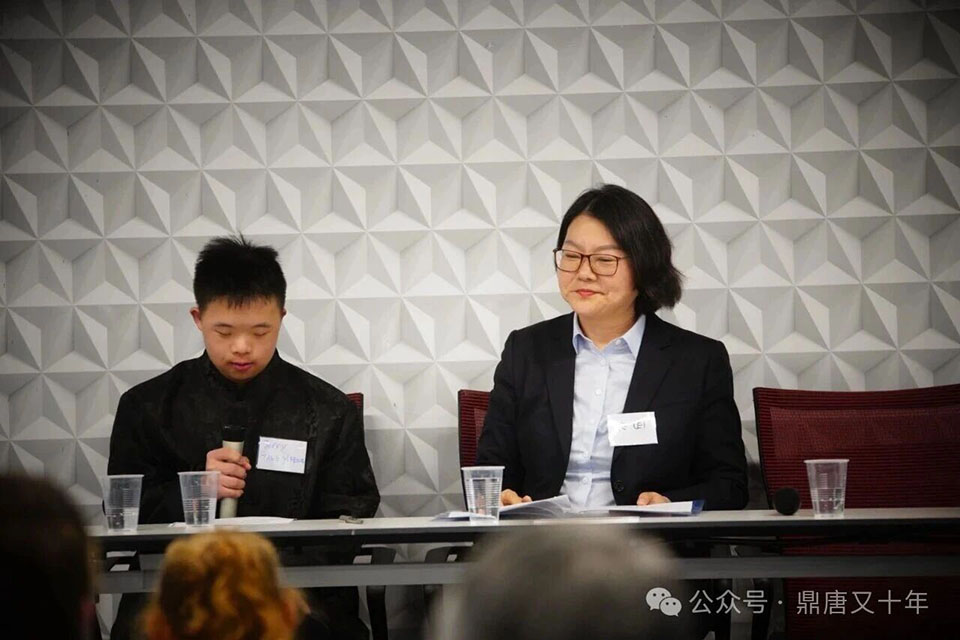
2024: Attended the UN WDSD Conference for the first time, with the Founder as speaker
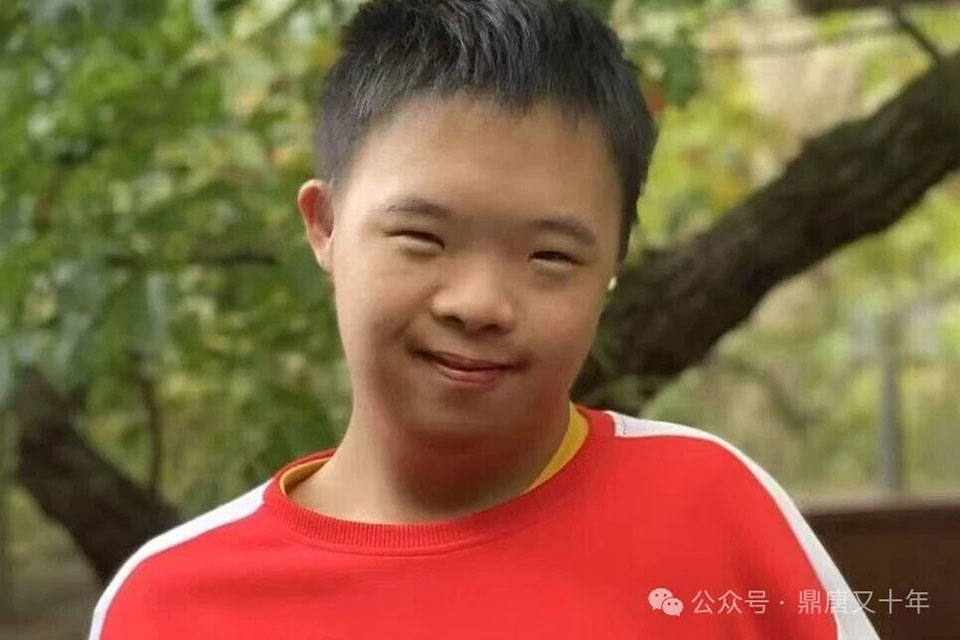
2025: Tang Yifeng appointed DSi Down Syndrome Ambassador — the first Chinese self-advocate with Down Syndrome in the DSi Ambassador Group.
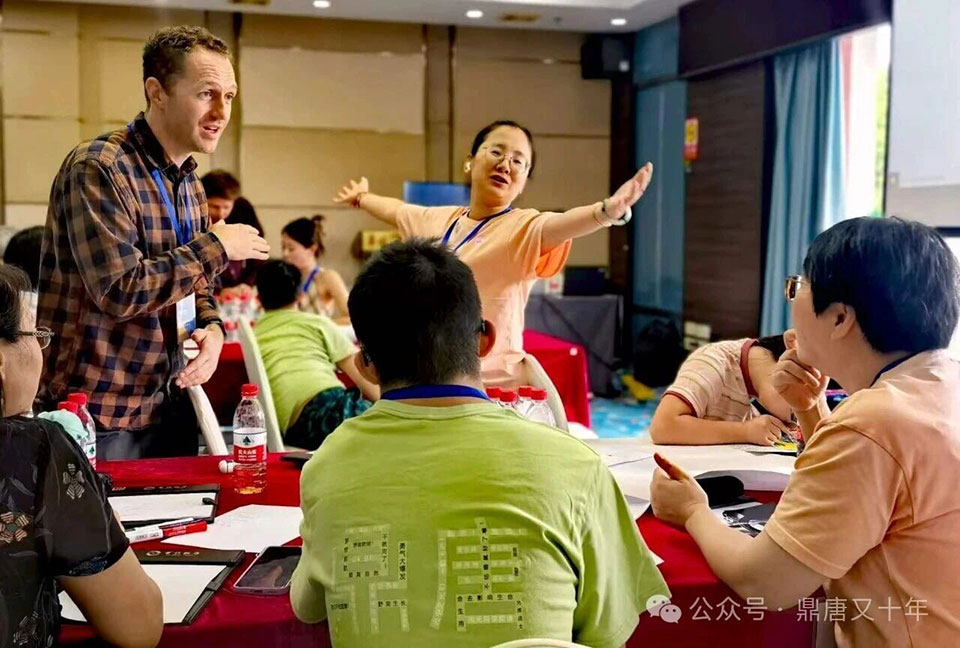
July 2025: Hosted Self-Advocacy Training Workshop; hosted the first-ever DSi visit to China.
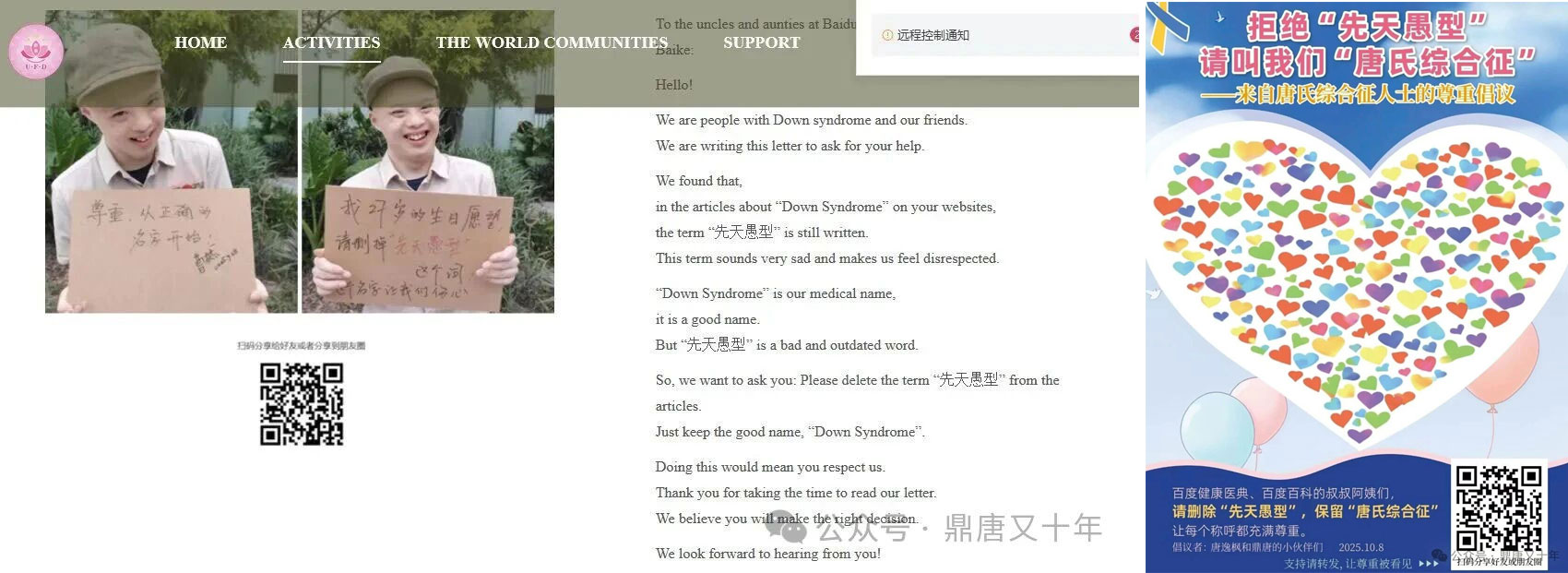
October 2025: A petition with over 600 signatories called on Baidu to remove discriminatory wording.
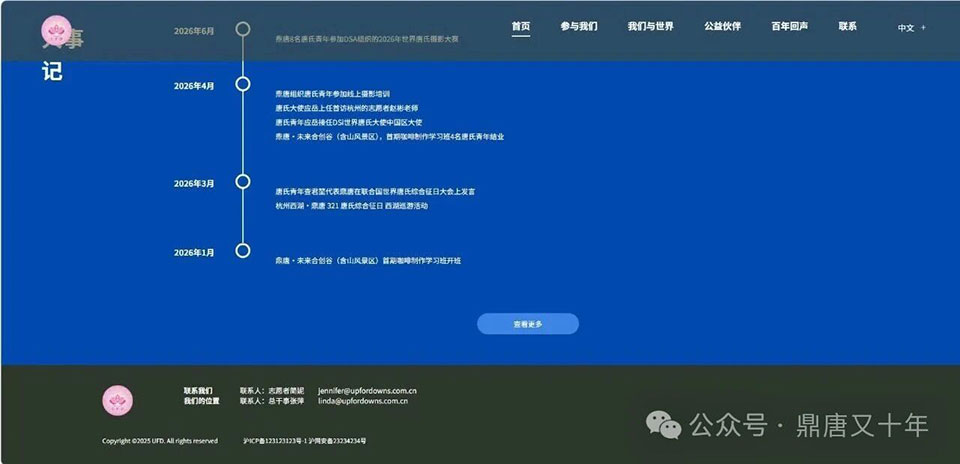
2025: Launch of bilingual website
(http://www.upfordowns.com.cn/)
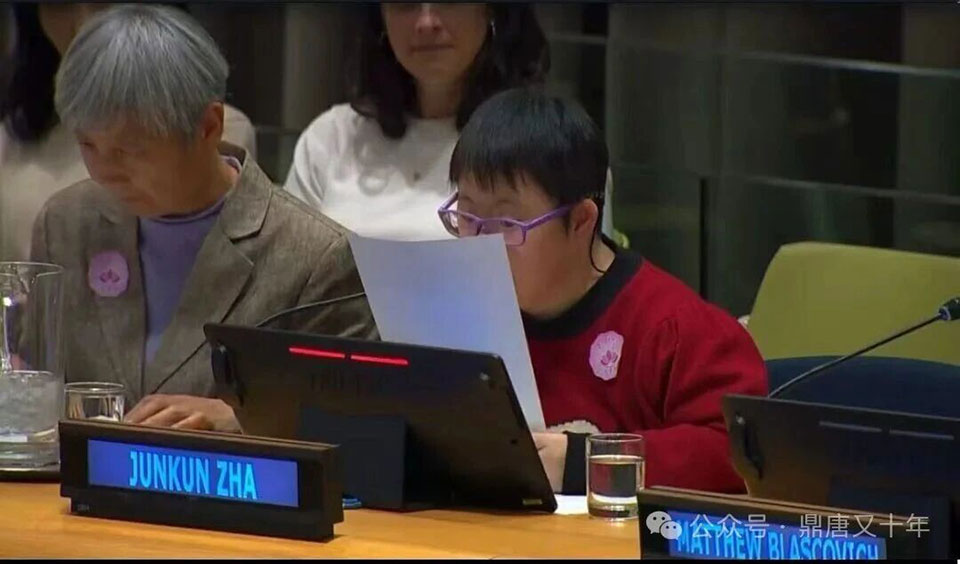
23 Mar 2026: Cha Junkun represented UFDC, delivering a Chinese-language speech at the UN WDSD Conference.
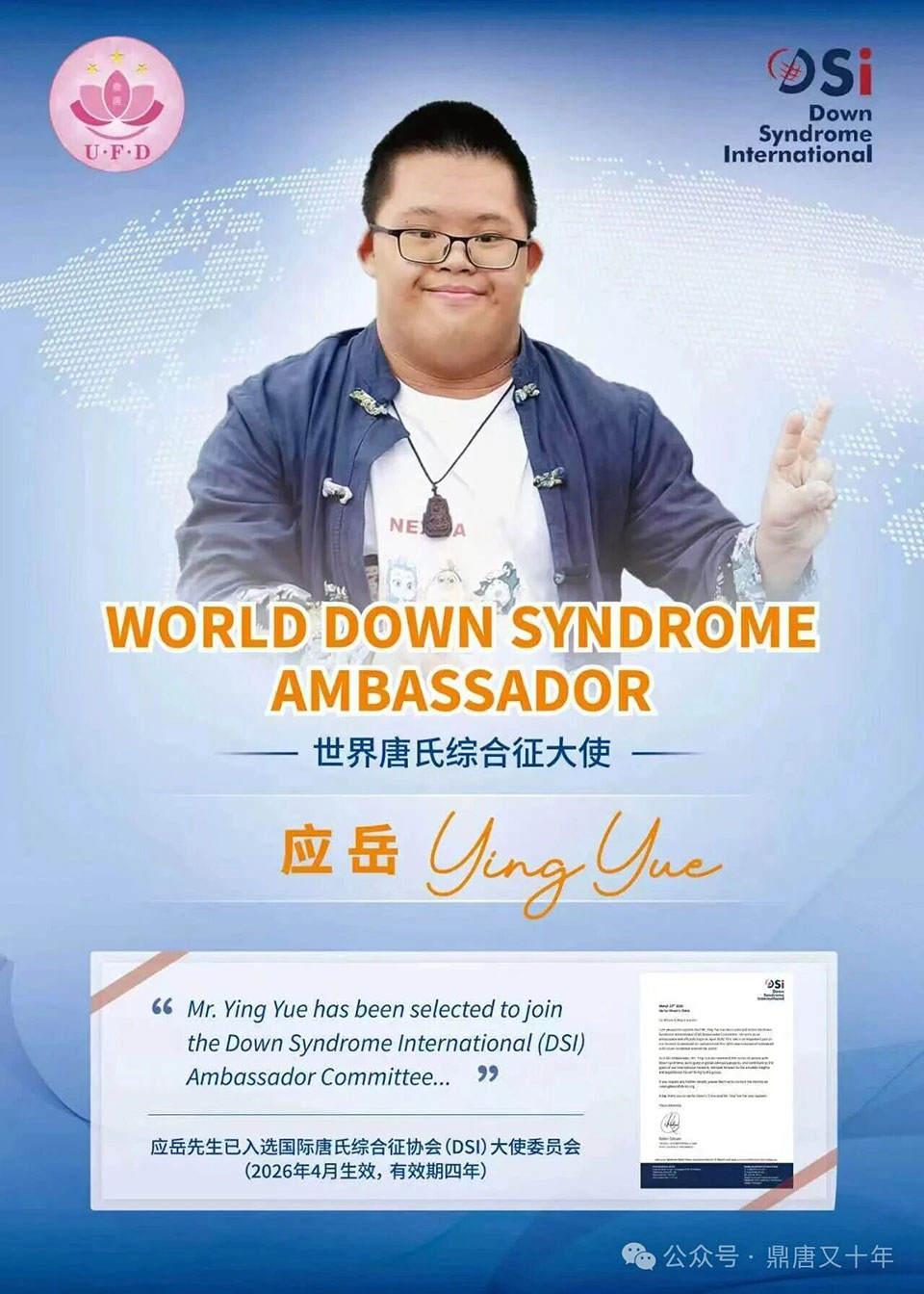
1 Apr 2026: Ying Yue appointed by DSi as succeeding Down Syndrome Ambassador for a four-year term.
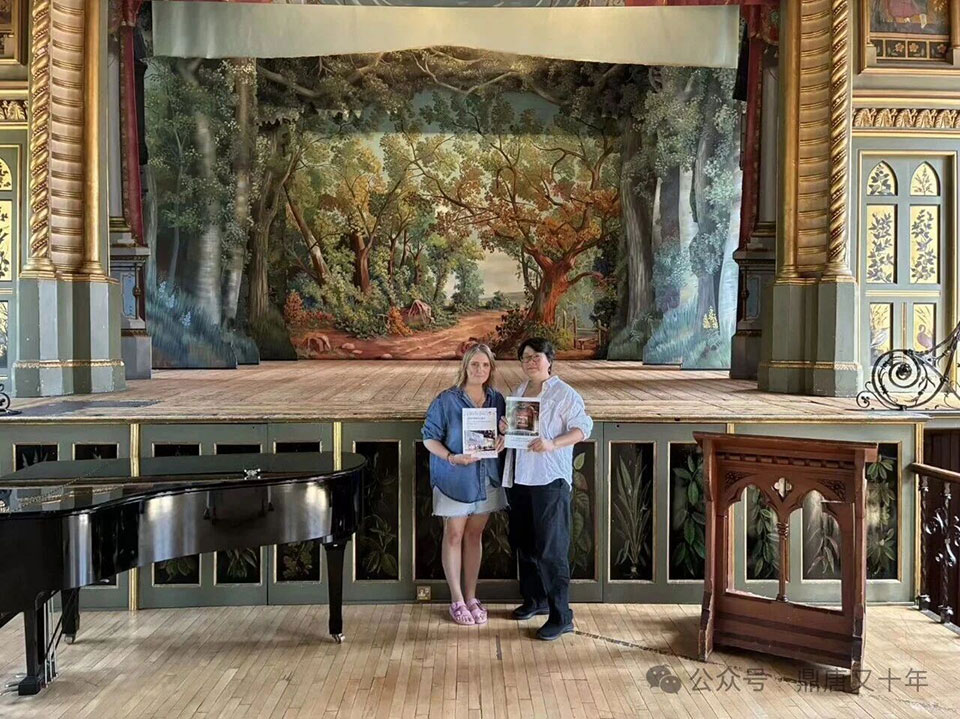
2 Jul 2026: Founder visited the Langdon Down Museum in London and presented the world’s first Chinese edition of the Global Health Survey Report.
Cha Jinkun first joined our activities in 2011. For many years, she was the girl who would step back when it was her turn to speak.
In 2025, she took part in self-advocacy training. After learning about the UN Convention on the Rights of Persons with Disabilities (CRPD), she used Doubao to create flashcards explaining the Convention. In March 2026, she spoke in Chinese at the UN WDSD conference. In September 2026, during a Playback Theatre session, she walked onto the stage voluntarily and invited everyone to sing together.
Her mother now leads our network’s health portfolio and is advancing the roll-out of the APDSF Health Passport in China.
This is what self-advocacy truly looks like: not a single moment, but fifteen years — a mother and daughter moving forward side by side.
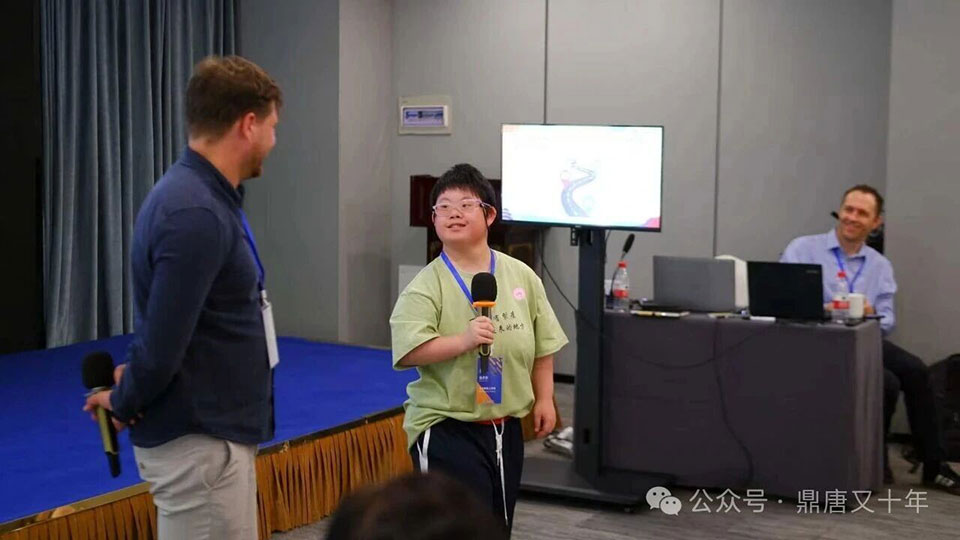
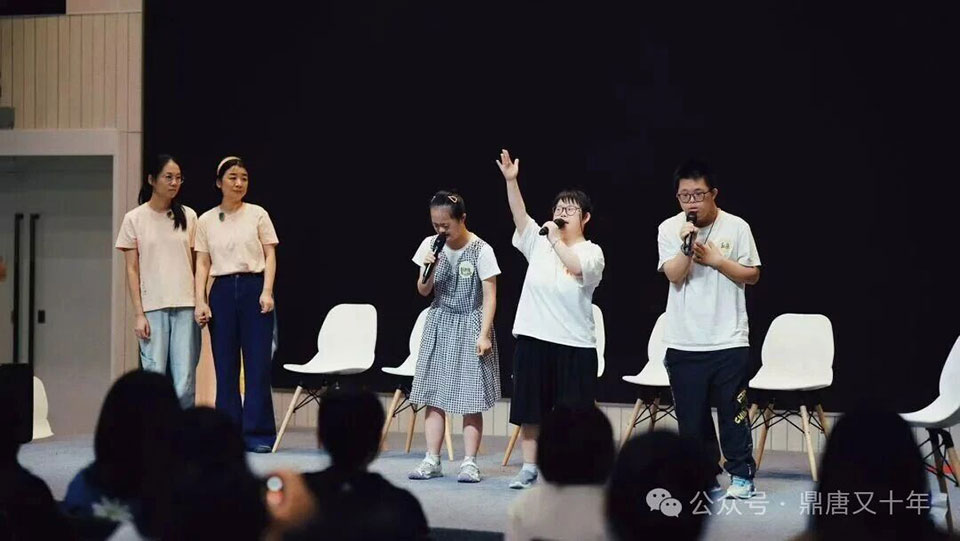
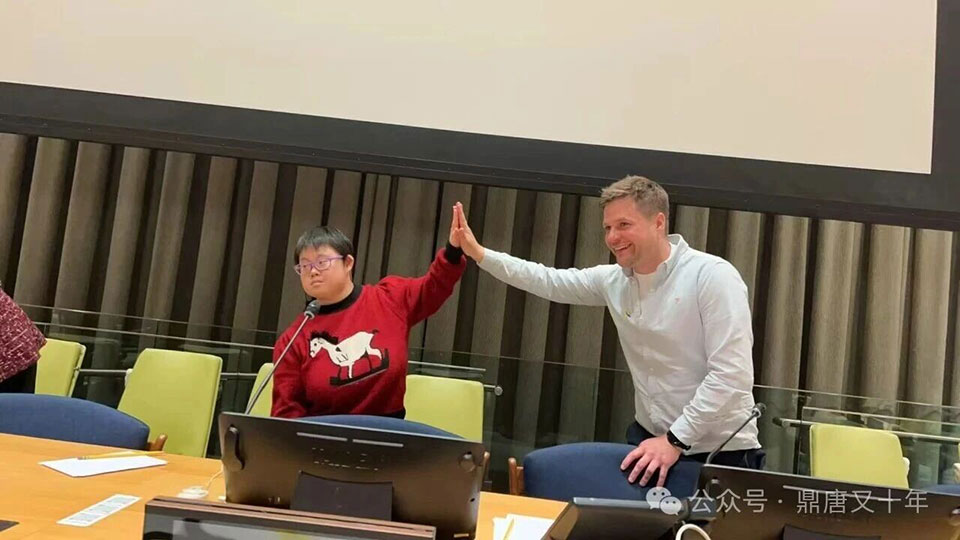
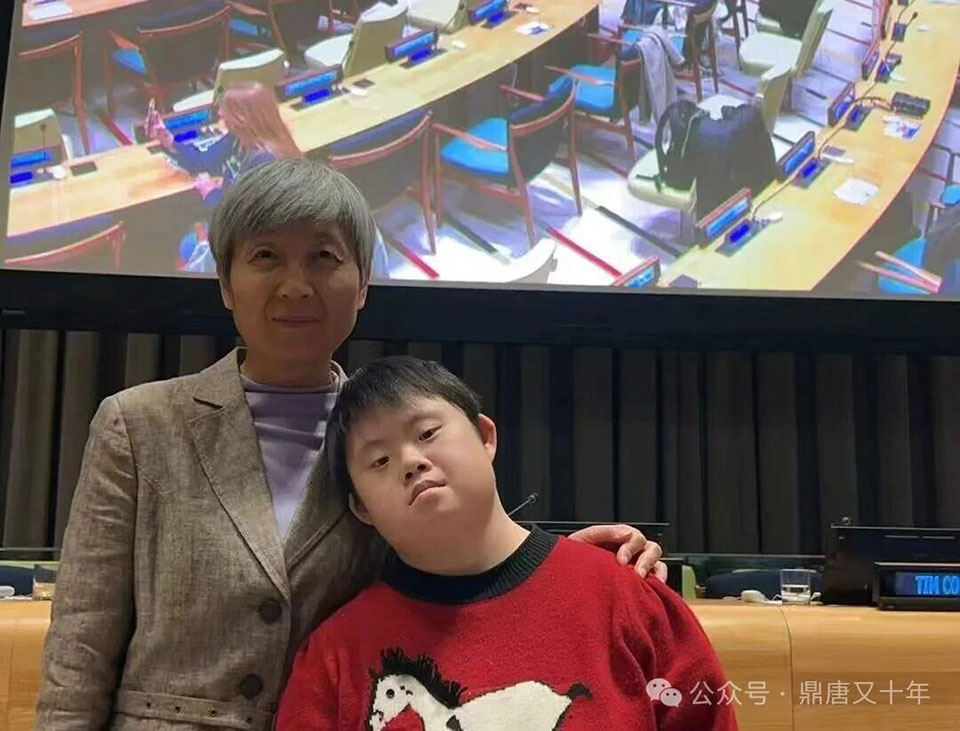
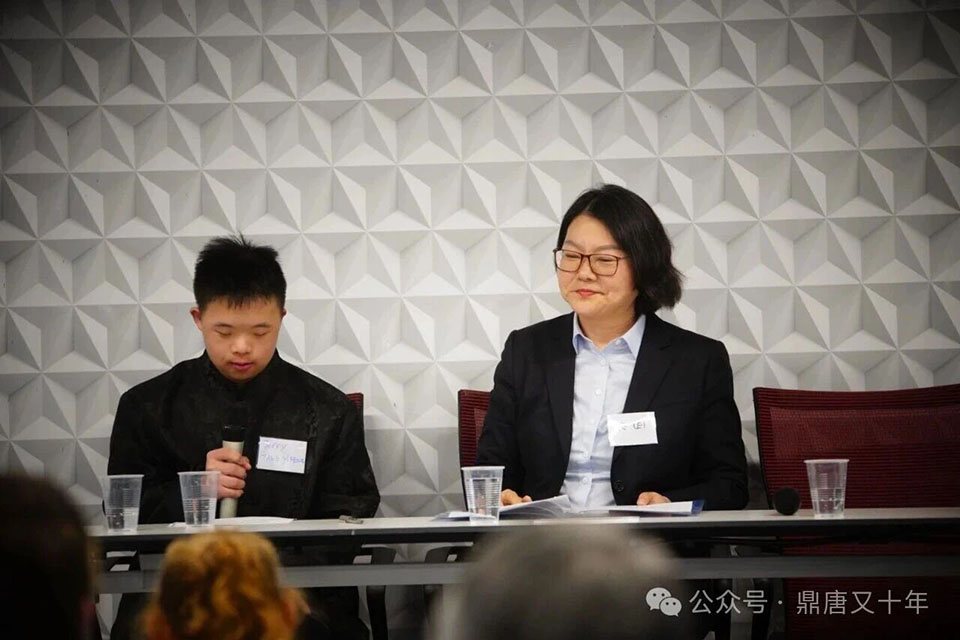
Kunkun and his mother Shen Jifang, photo taken at the UN Conference.
Over the next two to three years, our main work will focus on community inclusion in partnership with Lions Clubs and other networks, covering four pillars: self-advocacy, employment coaching, health equity, and community living.
Practically, together with our partners, we aim to create real opportunities: for people with Down syndrome to speak for themselves, access meaningful work, receive equitable healthcare, and live as full members of their communities.
We also hope to build a tripartite alliance with Hong Kong and Macao. When the time is right, we will prepare to bid to host the World Down Syndrome Congress.
We do not require financial support. What we need is:
- Visibility: speaking slots at APDSF and international forums;
- Connections: access to self-advocacy and community living models across Asia-Pacific nations;
- Knowledge: research, case studies and guest speakers on supported housing and adult services;
- Solidarity: APDSF's endorsement for UFDC's 2033 World Congress bid and our cross-region tripartite hosting model.
By Ye Lei

After I visited DSi on January 15, 2019, whenever people from other countries asked about Down syndrome cases in China, DSi would recommend me. As a result, I had an online communication with the president of the Down Syndrome Association of Australia. We had a 45-minute video chat. What impressed me deeply was theAustralian experience: how to unite all the Down syndrome organizations across the country to jointly strive to win the right to host the World Down Syndrome Congress.
The Australian serves as the vice president of APDSF (Asia Pacific Down Syndrome Federation). Down syndrome organizations all over the world have been united. There are organizations from Europe, the Americas, Africa, and the Asia-Pacific region. They have been doing this lively for many years, and we just didn't know about it.
The Australian vice president immediately informed the Indian president of APDSF that there were people in China dealing with Down syndrome! (This was a scene in my imagination.) Our Asia-Pacific region couldn't do without China!
So I received an email from the president of APDSF, and thus we established contact with the Asia-Pacific Federation.
On August 6, 2019, at the Kempinski Hotel in Beijing, I met Mr. Ramachandran, the president. We had a 40-minute conversation. Mr. President warmly invited us to join the Asia-Pacific Down Syndrome Federation. He said that as long as we are a group of people serving those with Down syndrome, we will be recognized and accepted. Come on! The Asia-Pacific region welcomes the Chinese!
In December, with the permission of the Chinese Down Syndrome Committee, we participated in the Asia-Pacific Annual Meeting as parents. During the national report session, I specifically stated that I was speaking on behalf of parents to tell the story of our ten-year agreement, which won the respect and praise of various countries in the Asia-Pacific region. Since then, we have become a member of the Asia-Pacific region. We feel at home in this big family and have established good relationships with Down syndrome organizations in various countries.
