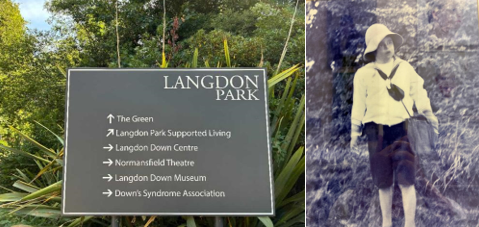
July 3, 2026, a bright summer day at Normansfield, England — home to the Langdon Down Museum.
Her name is Ye Lei, a mother from Hangzhou and Cao Ran’s mum.
When Cao Ran was born, she, like every other parent of a child with Down syndrome, endured countless sleepless nights filled with confusion. But she soon realized that tears and hiding would solve nothing. Instead of waiting for the world to accept her child, she resolved to build a stage for all these children with her own hands.
This thought later grew into the initiative Ten Years Together.
Back in 2011, she made a promise: over ten years, she would walk alongside her child, learn everything about Down syndrome, and take real action for this community. She never sought donations or publicity. Like a gentle thread, she wove scattered parents, volunteers and professionals into one connected group.
At that time, she thought she was just an ordinary woman with no special power. Yet she made a vow.
In 2006, she received an invitation to the World Down Syndrome Congress in Canada but was refused a visa twice. The pain of standing outside, unable to step in, pushed her to make an even bigger promise: one day, she would bring the World Down Syndrome Congress to China.
More than a decade has passed. From an ordinary Chinese mother, she gained a voice in the global Down syndrome community. Her project Ten Years Together evolved into Dingtang(Up for Downs China, UFDC in short), which joined the Asia Pacific Down Syndrome Federation and built partnerships with Down Syndrome International (DSI), the world’s leading body in this field. In 2025, UFDC bid to host the 2030 World Down Syndrome Congress, ranking second among the four final candidates.
“Success does not have to belong to me,” she said. “Making it to the top four and placing second is already a victory.”
That mother once locked out by visa rejections has now let the world see the community of people with Down syndrome in China.
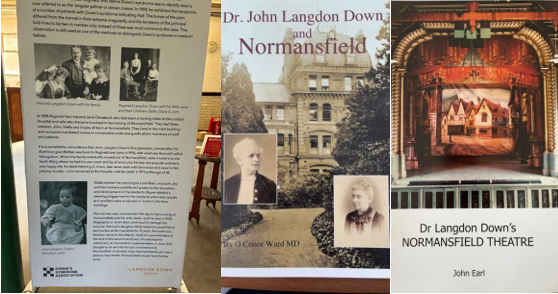
July 3, 2026. Sunlight spilled over Normansfield’s ancient brick walls, and Ye Lei finally stood before the former residence of Dr Langdon Down — now the Langdon Down Museum.
She stepped into the theatre, where Jo gave her a guided tour: 160-year-old gas lamps, four layers of stage curtains, vivid painted backdrops, four murals lining both sides… As she listened and looked around, she thought the hall was truly magnificent and stunning.
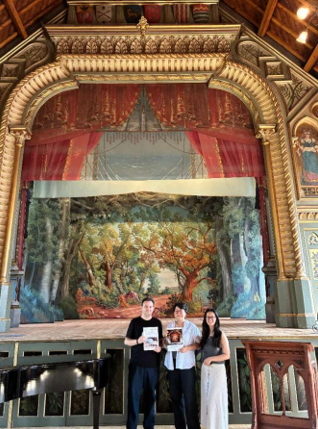
Yet as her gaze lingered, another scene unfolded in her mind: old black-and-white photos of children with Down syndrome, dressed in costumes, standing proudly on this very stage, performing with complete focus and joy.
Tears suddenly welled up in her eyes. She stood still without wiping them, letting them flow quietly through that bright summer afternoon.
Later, once they grew familiar, Jo told her: “At first I thought you were moved by how beautiful the theatre was. I wondered, could it really be lovely enough to make someone cry?”
Ye Lei smiled and replied: “I wasn’t looking at the theatre. I was looking at those children.”
While Dr Down was alive, Normansfield Manor served as his care home for children with Down syndrome. As its hostess, Mary managed every daily operation single-handedly, breathing real life into the estate. She set one strict rule for all new staff: they must play an instrument or act in theatre. She firmly believed art was far more than entertainment — it was healing. On stage, children learned to express themselves, cooperate with others, and grasp the confidence to say “I can do this too.”
After Dr Down passed away, the manor faced ruin. It was Mary who fought alone to keep the land from vanishing into history. The museum visitors see today, the theatre, all the antique photos and stage costumes — every single piece was preserved bit by bit by her. Without her, this vital chapter of history would have been lost to time. She was fierce enough to steer the manor through rise and fall, yet gentle enough to catch the light shining in every child’s eyes.
What Ye Lei devotes herself to mirrors Mary’s work. She built the core triangle of Dingtang around parents, volunteers and children, ensuring every child gets a chance to be seen. Her team lacks the prestige of large formal institutions — just a group of like-minded people happily carrying out their work with passion. Still, this small team opened the door for China’s Down syndrome community to hold dialogue with the world.
Mary once paced backstage, whispering to nervous young performers: “Look out at the audience; don’t worry if the seats are empty.” Thousands of miles away in Hangzhou, Ye Lei speaks to parents online: “Embrace all experiences, good and bad — only then can life feel complete.”
Separated by over a century, two mothers share the same quiet wisdom.
As the tour drew to an end, she stood for a long time gazing at Dr Langdon Down’s portrait.
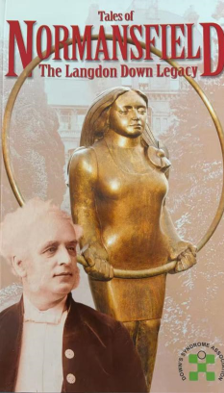
It was her first time seeing his likeness in person. Dressed in Victorian formal wear in the painting, his eyes were calm and steady — no fiery urge to “change the world,” just a quiet certainty that “this is how the world ought to be, and I am simply bringing it to life.”
She remained rooted to the spot, watching for minutes on end.
In that moment, she imagined him speaking to her:
“Keep going. No need for excitement or rush. If you succeed, carry on. If you do not, carry on just the same.”
There were no stirring speeches, no dramatic twists — only plain, unshakable words, as if stating an obvious truth.
Yet they filled her with boundless strength: quiet, deeply rooted inner resolve.
Dr Down faced countless setbacks in his lifetime: the medical world dismissed his discoveries, eugenicists attacked his compassionate vision, and Normansfield Manor teetered on bankruptcy multiple times. But he never wasted energy arguing or complaining; he simply kept working. Mary shared this spirit, as did the children under their care, and every young performer who stepped onto that Victorian stage. All of them understood one vital truth: faith is not something to get hyped about — it is something you live out, day after day.
Ye Lei suddenly understood the true meaning of this pilgrimage. It confirms what she had always known in her heart.
You are already on the path; just keep walking forward.
Before taking her leave, she pulled a special gift from her bag. It was a thick Global Down Syndrome Health Report, translated by Chinese volunteers after countless late nights of labour. On the final page, she signed her name formally: Ye Lei, Mother of Cao Ran, dated July 3, 2026.
She donated the report to the museum. Through this simple gesture from a Chinese mother, the voices of thousands of Chinese families raising children with Down syndrome would be etched into this century-long history.
“Call it a small personal wish,” she murmured softly.
Jo, the museum manager, accepted the report with great reverence and carefully stored it away. Then she turned and handed Ye Lei a hardcover book recording the museum’s full history.
“This is our story,” Jo said. “Now it belongs to you as well.”
The two women smiled at each other. Jo told Ye Lei she was happy to share the museum’s legacy with China’s Down syndrome community, ready to serve as a bridge between them.
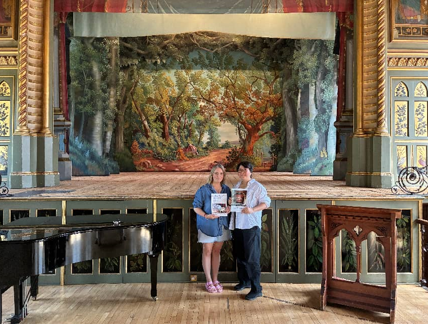
Ye Lei, in turn, told Jo that UFDC’s official website would launch a new column called Centennial Echoes. It would translate and publish the museum’s history, the stories of the Langdon Down family, and the quiet, unextinguished hopes buried by time.
From Normansfield to Hangzhou, from 1868 to July 3, 2026, from one signed health report to a brand-new online column — this century-old history would now echo in Chinese.
After finishing their formal exchange, they sat down for tea.
It was no stiff official meeting, just two women chatting face-to-face over mugs of tea, like old friends.
Sunlight still streamed brightly through the windows; that summer afternoon of July 3, 2026, stretched out gentle and unhurried.
Ye Lei shared how she felt called to this work — a string of unexplainable coincidences, moments where it felt as if some unseen force guided her forward, quiet certainty that settled over her in the dead of night.
Jo listened intently, then switched to telling ghost stories: the sound of footsteps down the corridor where Everly once stayed, unexplained tapping noises echoing through the theatre, old tales passed down by museum staff over generations. They laughed together over their tea, the atmosphere so relaxed it felt less like a historic manor and more like someone’s cosy living room.
When they finished their drinks, they took a photograph together. Jo grinned widely for the camera, slanted sunlight falling across both their shoulders.
Ye Lei stood to leave, glancing one last time toward the theatre.
She thought back to the moment she had broken down in tears there, Jo’s confused question of whether the hall was truly beautiful enough to move her to cry, and her own reply:
“I wasn’t looking at the theatre. I was looking at those children.”
The flame has never gone out. It only speaks new languages, moves to new lands, and is tended by one mother’s hands after another, burning steadily onward.
July 3, 2026, Normansfield — bathed in perfect sunlight.